
What If Your Expectations Are Getting in the Way of Love?
A dating & relationship coach shares her wisdom for singles who are motivated to marry in a featured podcast interview.
FINDING LOVE
Fernanda
6/29/20269 min read
Fernanda: That's such an important point. Can you say more about how our history shapes who we're drawn to?
This is something I am very serious about in my coaching. If we haven’t done our self-healing work, we can find ourselves attracted to people who replicate the dynamics of relationships we had with difficult parents or caregivers. Not because they’re right for us, but because they feel familiar. We are trying unconsciously to resolve something old with someone new.
I was there for this. My first husband had some controlling tendencies that I didn't fully notice at the time because of the way he showed up: doing things for me, taking care of things. It felt comfortable. Acts of service are truly one of the ways I feel love. But there was something beneath it I didn't know yet. Once I did the inner work, I understood what I really needed vs what just felt familiar.
That's why values clarification is not just a practical exercise. That’s really an act of self-knowledge. "And it's why I love working with clients who want to understand themselves, not just find a partner, but become the kind of partner they want to attract.
Fernanda: What mindset shifts tend to make the biggest difference for the people you work with?
Lots of people come in with what I call gremlins, which are the inner voices that say things like, “who's going to want me at this age?” or, "There aren't any good people left.” My clients are in their 70s, and they’re still dating, still open, still finding love. So I’m not going to let anyone feed into a scarcity mindset on my watch.
I developed something called the Thrive Model, which helps people reconnect with who they are: their talents, their values, their hearts, and how they give to the world, rather than what they think is working against them. It's a real reframe. It goes from ‘why would anyone want me’ to ‘here’s what I have to offer a relationship and the right person is going to see and love that.’
I also put a lot of emphasis on responsiveness: in coaching and in dating. The clients who are consistent, who communicate, and who advocate for their needs seem to do well in relationships as well. I had a client tell me softly that I appeared frazzled during our coaching session. Too many things were tugging at my attention. I acknowledged it was a bad time for me, and we found a time that would be better. That’s a relational skill. That was brave. And we ended up with a much richer coaching relationship because of it.
Fernanda: What about online dating? You mentioned 80% of your successfully coupled clients met that way. What do you tell people who feel discouraged by it?
There are some good people out there. I’ve seen this happen again and again. The trick is not to be messaging back and forth for weeks before you ever meet face to face. If someone is genuinely interested in a relationship and they are who they say they are, then they will show up. Set that expectation in advance.
I also remind people that sometimes the timing just isn’t there and that’s not always about you. “Someone might be on an app, really lonely, but not fully available. Maybe they are going through something in their personal life, or their situation changed. I had a client who matched beautifully with a guy, and things were going great, and then he got a new job and started traveling. That was a change of circumstances, not a character flaw. That difference is very helpful to know.
Fernanda: What separates the people who eventually find a great relationship from the ones who stay stuck?
Preparedness: The people who find love are the ones who keep showing up: to themselves, to the process, to the discomfort of being vulnerable again. They tell us what they need. They remain curious, not closed off. They are happy to be surprised at who the right person is.
And those who get stuck are the ones who let the past write the whole story. They thought it wouldn't work because of what hasn't worked. And that story turns into a self-fulfilling prophecy.
I believe that every pot has a lid. I do. I’ve seen people find meaningful love at 50, at 65, at 77. The work is in believing you're worth finding and then letting yourself be found.
Amy Schoen is the founder of Motivated to Marry, a coaching practice for singles seeking lasting, committed relationships. She's the author of Get It Right This Time: How to Find and Keep Your Ideal Romantic Relationship and hosts a weekly community coaching club alongside her one-on-one client work.
You can find her at motivatedtomarry.com and on YouTube at Relationship Coach Amy Schoen, where she shares free resources for singles at every stage of the journey.
Want to hear the full conversation? Listen to Amy's episode on the Connectedness Podcast right here: https://open.spotify.com/episode/6nx4G6xA6I0UxiCJrVThek?si=2xMaWimYQ5idYbJidwuVyw
And if this resonated with you, share it with a friend who might need to hear it. You never know who's quietly hoping someone will remind them that love is still possible.
A conversation with relationship coach Amy Schoen on dating with clarity, courage, and a whole lot of self-awareness
There’s a version of dating that most of us know pretty well. The swiping. The overthinking. The first dates that seem like job interviews. And then there are the quieter, more internal things we bring into every one of those experiences: the expectations we’ve built up over years of living and loving and sometimes getting hurt. We do not always call them expectations. They look like standards sometimes. Sometimes they’re like our guts. And sometimes, if we’re really honest, they’re just old stories we haven’t gotten around to questioning.
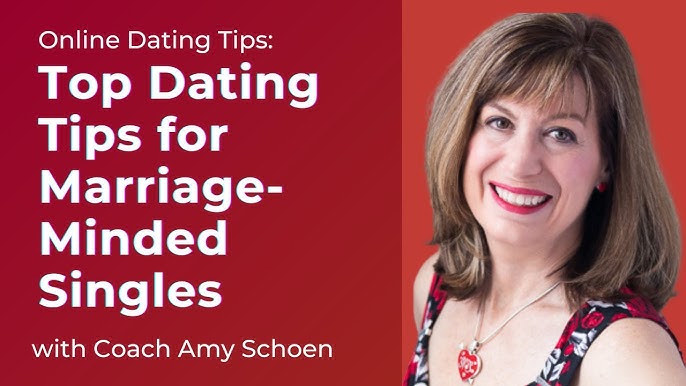
Amy Schoen has been helping marriage-minded singles figure all of that out for 20 years. She is a certified professional life coach and an ICF PCC-credentialed relationship coach working with clients in their late 20s to late 70s who want a real committed relationship and don’t quite know what’s been getting in their way. Amy's perspective is rooted in the fact that she did not come into this work as an outsider looking in. She lived it. Divorced in her mid-thirties, she found herself in the same place where many of her future clients would eventually find themselves: driven, self-aware, and somehow stuck.
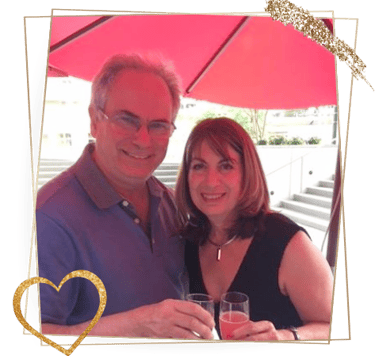
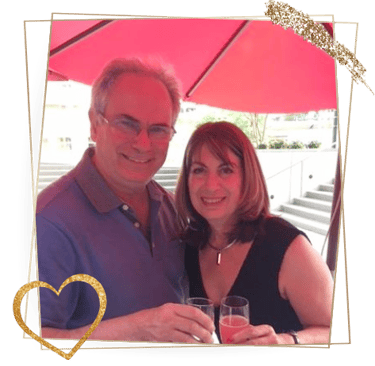
She got a coach when she turned 40. It wasn't long before she met her husband. Together they will celebrate 24 years of marriage this summer, with an 18-year-old still at home. “It’s very exciting at this stage,” she laughs warmly. It’s the kind of story you want to lean in and ask her all about.
So I did.
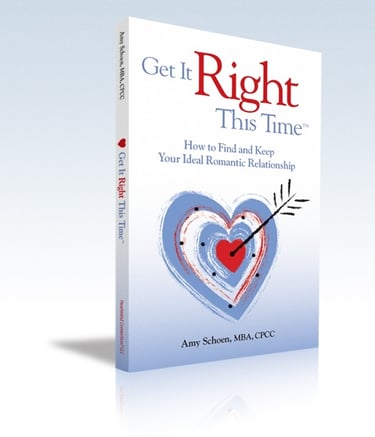
Photo credit: Amy Schoen
Fernanda: When you're working with singles who are looking for a serious relationship, what are some of the most common expectations you see people bringing into dating?
Pacing is one of the biggies. One is ready to move on and the other needs more time. Maybe because of past experiences, maybe because they’re more introverted. “That’s something I work on a lot, getting people on the same page,” he said. My clients get exclusivity in three to six dates on average, but that's because they've done the internal work first. They know who they are and what they want, so when the right person comes along, there’s a real recognition,” she said.
Another large area is time and availability. How often do you see people? How much space does each of you need? I had a client in her 60s who met a wonderful man. He had family close by, which is exactly what she wanted. Things were going great. And then he became a consultant and started traveling. All of a sudden, the relationship was completely out of whack. She took off her harness. She wanted a playfellow. And that’s a perfectly reasonable expectation. It just wasn’t in line with where he was at.
Kids, finances, family dynamics, even pets: all of these become sources of unspoken expectations that people don't always realize they're carrying until something bumps up against them.
Fernanda: How do you help people figure out the difference between a healthy standard and a rigid dealbreaker that might actually be limiting them?
I take clients through a values clarification process first: a deep dive into maybe two dozen values. Then we really explore which ones you need to share with a partner versus which ones you just want a partner to respect. That difference is more important than most people realize.
Then we do what I call the 'must haves and would like to haves' exercise. When I was dating, my dealbreaker was that whoever I was dating had to be willing to live with my cat. I wasn't letting her leave; she had been my rock throughout my divorce. He didn’t have to love her. He just needed to be okay with her. My wish was that he would actually be a cat person. Quite different things.
Another example: I love to dance. My non-negotiable was that a man had to be willing to get up and make a fool of himself on the dance floor. He didn’t need to be a great dancer; he just needed to be willing. My ex-husband would sit there the entire time, too self-conscious to move. I knew I didn't want that again. So the must-have was willingness. The would-like-to-have was someone who could actually keep a beat.
When clients become really clear about that distinction, it opens up possibilities that they might otherwise have missed. I had one client who was very clear that her partner needed to share her passion for sustainable living and growing her own food. I had to push back gently: Does he need to share it, or does he need to support you in it? Thank you. Perhaps even learn from you? These are very different requirements. And when she saw the difference, it changed her whole dating landscape.
Fernanda: Do you see people ruling out potential partners too quickly?
That was my biggest error. I was quick to condemn. I almost missed my husband because of this. My coach actually had to tell me to take a second look at him. He was forty-seven years old and had never been married. I made a lot of assumptions about what that meant.
But when I actually spent time with him, I realized he was an introvert. And I’ve learned to think of introverts like onions. You have to peel away a few layers to get to the good stuff. He was warm, funny, working on himself, and actually wanted what I wanted. He’s been dating for seven years and was hoping to get married, and it didn’t happen, not because of him but because she was never really into it. He'd done the work to make that understood and move on. That means a lot.
Yes, I see people writing others off very quickly all the time. My question is always, "What are you judging, and is that a fair assessment of who this person actually is?"
Fernanda: What about chemistry and attraction? How much weight should people put on that early on?
Here, there is definitely a difference between the men and the women. Men have a faster eye for visual attraction. As women get to know someone, they can become more attracted to them, and I have seen that play out beautifully over and over.
I had a client in her early 40s, great profile, ready to go. She matched with a guy in January (one of the best times to go online, btw) and after their first meet-up she said she just wasn’t feeling it. I looked at everything about this person and told her to go out with him a few more times before she makes up her mind. She did. He opened up and got more vulnerable, and that's when the attraction kicked in. In the end, they were together.
So there are limits. If it feels off — not just neutral, but genuinely awkward — trust that. I strongly recommend the book "The Gift of Fear" because our instincts about safety are wired for a reason. The difference between a feeling of mild unfamiliarity and an actual red flag is something worth learning to recognize.
And something I always tell clients — if you feel a sense of calm and safety with someone, even if they don’t check every box on your list, pay attention to that. Peace is undervalued in dating. Sometimes the people who seem “exciting” right off the bat are exciting for the wrong reasons – they remind us of something familiar from our past that we haven’t quite healed from yet.
Connecting individuals through meaningful relationships and valuable resources.
connect
Newsletter
Subscribe to our newsletter for valuable insights and event news.
© 2026. Filled Cups. All Rights Reserved.
INSPIRATION