
I Read "How to Feel Loved" So You Don't Have To (Well, Sort Of)
Though it was a good book, I felt they could have gone deeper.
BECOMING YOURSELFSOCIAL SKILLS
Fernanda
7/5/20264 min read
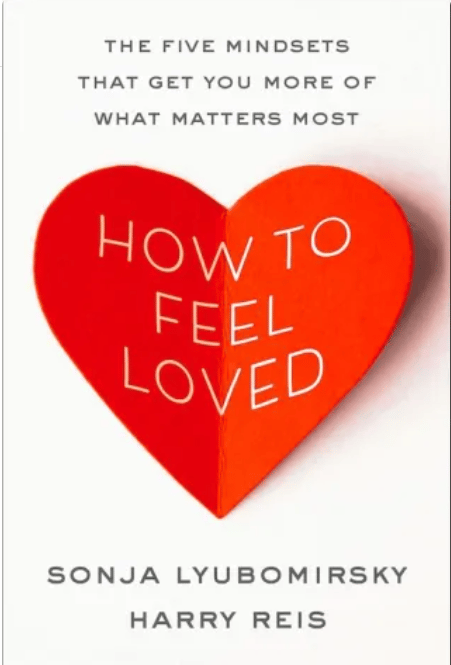
(I may earn a small commission from the purchase of this book through the link below.)
I just finished listening to How to Feel Loved: The Five Mindsets That Get You More of What Matters Most by Sonja Lyubomirsky and Harry Reis, and I have thoughts. So many thoughts that I had to sit with my journal for a solid hour before I could even start writing this.
Here's the thing. I picked up this book expecting a deep dive into learning how to love ourselves first. I thought it might explore the inner work that makes us capable of receiving love in the first place. Maybe I missed that part somewhere in the audiobook, but what I got instead was mostly about how to show up in our conversations and relationships so other people can actually see us. Still valuable. Just not the book I thought I was picking up.
So let me walk you through what the book actually offers, and then let's talk about the piece I think is missing.
The Big Idea
Lyubomirsky and Reis spent years studying happiness science and relationship science, and they landed on something that honestly stopped me in my tracks. Being loved and feeling loved are two completely different experiences. You can have people who love you deeply and still walk around feeling unseen, unworthy, or alone. I know I've lived that. I bet you have too.
Their argument is that feeling loved isn't about making yourself more impressive, more agreeable, or more polished. It's about showing your full, messy, contradictory self to the people in your life and inviting them to do the same. They call this back and forth the Relationship Sea-Saw, and it happens through five mindsets you can start practicing today.
The Five Mindsets
The Sharing Mindset is about letting people see your full, complicated self instead of the curated highlight reel. That means your strengths and your contradictions both get to be in the room.
The Listening-to-Learn Mindset asks us to actually tune into another person instead of just waiting for our turn to talk. This one hit me hard because I know how often I catch myself half listening while I'm already forming my response.
The Radical Curiosity Mindset is about asking better questions because you're genuinely interested in someone's inner world, not because you're being polite.
The Open-Heart Mindset means being kind and affirming toward people for who they actually are, not who you wish they'd be.
The Multiplicity Mindset invites us to accept the messy complexity in ourselves and the people we love. We contain multitudes, contradictions and all, and that's not a flaw to fix.
The Five Myths They Bust
The authors also call out what they call the Five If-Only Beliefs, and I think a lot of us have said at least one of these to ourselves at some point.
If only I were more attractive, powerful, or successful, I'd feel more loved. If only people knew all my positive qualities and accomplishments, I'd feel more loved. If only I could hide my flaws, I'd feel more loved. If only my partner spoke my exact love language, I'd feel more loved. If only I could get my partner to love me more, I'd feel more loved.
None of these hold up under real scrutiny, and honestly, reading them laid out like that felt a little like getting called out by two psychology professors who somehow know exactly what runs through my head at 2am.
Where I Wanted More
Here's my honest take. The five mindsets are genuinely useful, and I think anyone could use them to build warmer, more connected conversations starting tomorrow. But I kept waiting for the book to go one layer deeper, into the part where we actually become people capable of holding that kind of vulnerability without falling apart.
Because here's what I know from my own journey and from the hundreds of conversations I've had running Filled Cups. You can learn every mindset, every communication tool, every "right" thing to say, and still feel like you're performing intimacy instead of living inside it. That's because feeling loved doesn't start with the other person's response to us. It starts with whether we believe we're worthy of love in the first place.
That's the inner work the book doesn't fully get into. Therapy that helps you understand where your sense of unworthiness came from. Self-talk that's intentional instead of automatic and cruel. The kind of deep self-reflection that asks not just "How do I connect with others?" but "Why do I believe connection isn't safe for me?" Self-acceptance that doesn't wait for anyone's approval. And compassion for yourself on the days you get it wrong, because you will get it wrong sometimes, and that's part of being human, not a disqualifier from love.
I think the five mindsets work best once you've done some of that inner groundwork. Sharing your full self is a lot easier when you actually like the self you're sharing. Staying open-hearted with someone else gets a lot more sustainable when you've already extended that same openness to yourself first.
My Takeaway
If you're looking for practical tools to deepen your conversations and feel more connected in your relationships, this book delivers. Lyubomirsky and Reis back everything with real research, and the Relationship Sea-Saw is a genuinely helpful way to think about how connection actually builds between two people.
But if you're like me and you're hoping to understand why feeling loved feels so hard in the first place, know that this book gets you partway there. The rest of that road runs through your own relationship with yourself. That's the work I keep coming back to, and it's the work I think we don't talk about enough in this whole world of dating and relationships and putting ourselves out there.
You can do every mindset in this book perfectly and still feel unworthy underneath it all if you haven't done the work of believing you deserve to be loved exactly as you are. So maybe the real five mindsets we need are ones we hand ourselves first, long before we ever hand them to someone else.
Have you read this one? I'd love to hear if you got something different out of it than I did. Drop a comment or send me a message; I always love hearing how these books land differently for everyone.
Connecting individuals through meaningful relationships and valuable resources.
connect
Newsletter
Subscribe to our newsletter for valuable insights and event news.
© 2026. Filled Cups.® All Rights Reserved.
INSPIRATION